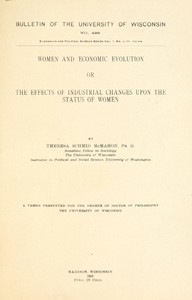
Women and economic evolution: or, The effects of industrial changes upon the…
So, what's this century-old book actually about? Theresa Schmid McMahon was a sociologist writing at a time when America's landscape was transforming from rural to industrial at breakneck speed. 'Women and Economic Evolution' is her attempt to trace the ripple effects of that earthquake, specifically through the lives of women.
The Story
There isn't a traditional plot with characters, but the 'story' is the massive, real-life shift in how people worked and lived. McMahon starts by looking at women's roles in pre-industrial societies, where home and work were often the same place. Then, she chronicles the upheaval: men leaving for factory jobs, new consumer goods replacing homemade items, and the home becoming less of a production center and more of a consumption hub. She tracks how this created new kinds of jobs for women—as teachers, clerks, and factory workers—while also changing what it meant to be a wife and mother. The narrative follows the economic threads connecting these changes to bigger social movements, like the push for women's education and suffrage.
Why You Should Read It
This book surprised me. I expected a dusty academic text, but McMahon writes with a clear, forceful purpose. You can feel her urgency. She connects dots in a way that makes our current world make more sense. Reading her analysis of how industrialism separated 'work' from 'home' is like getting the origin story for modern dilemmas about childcare, unequal housework, and the struggle to balance career and family. It gives historical depth to conversations we're still having today. It's not a cheerleading book; it's a clear-eyed look at both the new opportunities and the new constraints that industrialization created.
Final Verdict
This is a perfect pick for anyone who loves history that feels relevant, or for readers interested in feminism, economics, or sociology who want to go back to the source. It's for the person who wonders 'how did we get here?' when looking at gender roles. It’s not a light beach read, but it's far more accessible than you'd think for a book from 1912. If you enjoy authors like Stephanie Coontz (who writes about the history of marriage and family) or just want a foundational text that explains the economic roots of so much modern life, give Theresa Schmid McMahon your time. She was asking brilliant questions over a century ago that we're still working to answer.
No rights are reserved for this publication. Access is open to everyone around the world.