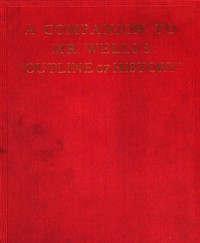
A companion to Mr. Wells's "Outline of history" by Hilaire Belloc
Okay, let's set the scene. It's the early 1920s. H.G. Wells, the famous sci-fi writer and thinker, drops a bombshell: a single-volume history of the entire world called The Outline of History. It sells like crazy. Wells presents human history as a steady march of progress, guided by reason and science, with organized religion often painted as a roadblock. Enter Hilaire Belloc. He's a prolific writer, a fierce Catholic, and a historian who sees the Catholic Church as the central, civilizing force of Western civilization. He reads Wells's book and sees red.
The Story
This isn't a novel with a plot, but the narrative is all conflict. Belloc goes through Wells's Outline chapter by chapter, point by point, and contests it. He zeroes in on what he sees as Wells's biggest errors: the treatment of early Christianity, the role of the Catholic Church in preserving culture after the fall of Rome, and the characterization of the Middle Ages as a 'dark' age. Belloc argues that Wells, a brilliant writer but not a trained historian, relies on outdated or biased sources and lets his anti-religious beliefs distort the facts. The book is Belloc's meticulous, often sarcastic, correction. He's not just saying 'Wells is wrong'; he's trying to rebuild the historical narrative with the Church at its heart.
Why You Should Read It
You should read this not for a balanced history lesson, but for the spectacular intellectual drama. Belloc's voice is the star here. He's combative, eloquent, and frequently funny in his disdain. You can feel his genuine outrage on every page. It's a masterclass in polemical writing. More importantly, it crystalizes a debate that's still raging today: how do our deepest beliefs shape the stories we tell about our past? Are we looking at evidence, or just finding what confirms what we already think? Reading Belloc challenge Wells forces you to think about who gets to write history and why.
Final Verdict
This is a niche book, but a fascinating one. It's perfect for history buffs who enjoy seeing how historical interpretations clash, for readers interested in the early 20th-century culture wars, or for anyone who loves a good, old-fashioned literary feud. Don't read it to learn 'the truth' about history—read it to watch two brilliant, stubborn minds in a battle over what that truth might be. Just be prepared to possibly want to argue with both of them by the end.
The copyright for this book has expired, making it public property. Preserving history for future generations.