
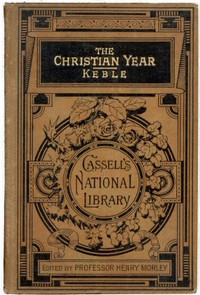
The Christian Year by John Keble
Okay, let's clear something up first: this isn't a novel with a plot. Calling 'The Christian Year' a 'story' in the usual sense isn't quite right. Think of it instead as a companion, a guidebook for the soul that follows the rhythm of an entire year.
The Story
John Keble, an Anglican priest and poet, wrote a poem for every Sunday, feast day, and holy day on the church calendar. That's over 80 poems in total. Each one is tied to the specific Bible readings or themes for that day. So, you get a poem for Advent that feels expectant and hushed, one for Easter that bursts with quiet joy, and ones for ordinary Sundays that find meaning in everyday life. The 'narrative' is the journey of a year in faith, with all its ups and downs, doubts and assurances, mirrored in the natural world outside Keble's window.
Why You Should Read It
I'll be honest, some of the language feels old-fashioned—it was published in 1827. But push through that, and there's a surprising warmth here. Keble has this incredible gift for linking the spiritual world with the physical one. A frosty morning isn't just cold; it speaks of God's purity. The harvest isn't just about crops; it's about gratitude. Reading these poems slowly, maybe one a day or one a week, forces you to pause. In our non-stop world, that's a rare gift. It's less about doctrine and more about feeling—about cultivating a mindful, attentive heart. You don't have to share Keble's exact beliefs to appreciate the quiet beauty and reflective space he creates.
Final Verdict
This book is perfect for anyone feeling spiritually restless or just plain busy. It's for the reader who loves poetry, history, or nature writing and wants to see how those things can weave together with faith. It's a fantastic pick for someone exploring classic Christian writings but finds heavier texts intimidating. If you enjoy the thoughtful pace of writers like Wendell Berry or the nature-infused spirituality of Mary Oliver, you'll find a kindred (if older) spirit in Keble. Give it a try as a bedside book. Read a poem, then sit with it. You might be surprised by the peace it brings.
This publication is available for unrestricted use. You are welcome to share this with anyone.

Kimberly Clark
5 months agoI was skeptical at first, but the emotional weight of the story is balanced perfectly. Thanks for sharing this review.