
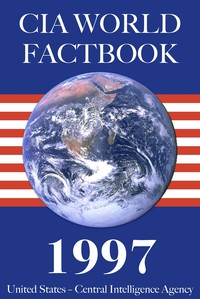
The 1997 CIA World Factbook by United States. Central Intelligence Agency
Let's be clear from the start: this is not a novel. There's no plot twist on page 47. The 1997 CIA World Factbook is exactly what it says on the tin—a massive, organized collection of data about every country and territory recognized in 1997. Think of it as the ultimate spreadsheet, turned into a book.
The Story
There's no traditional story here. Instead, the 'narrative' is the state of the world in a single year. Each country gets a few pages breaking down its geography, people, government, economy, and communications. You'll learn that in 1997, Afghanistan's life expectancy was 46.3 years, that Canada had 1.4 million km of roads, and that the internet domain for Tuvalu was '.tv'. It methodically moves from Afghanistan to Zimbabwe, painting a stark, numbers-based portrait of a planet on the cusp of the new millennium. The only 'characters' are the nations themselves, defined by their statistics.
Why You Should Read It
I love this book for its sheer, unedited weirdness. It's a primary source that feels almost alien now. Reading it in 2024 is a trip. You see countries that don't exist anymore (Zaire), economies about to be upended (see the entry for 'communications' in most places), and a world without social media or smartphones. It's brutally honest in a way modern summaries aren't—the data is just presented, without spin. You get to be the analyst. Paging through it, you start making connections the book itself never states. Why is the literacy rate so low here? Why is the debt so high there? It turns you into an armchair detective of global affairs.
Final Verdict
This is a niche pick, but a fantastic one for the right reader. It's perfect for history buffs, trivia lovers, and writers who need period-accurate details. If you enjoy getting lost in almanacs, or if you're writing a story set in the late '90s and need to know what the average phone line density was in Bulgaria, this is your holy grail. It's not a cover-to-cover read for most, but as a reference book and a historical artifact, it's completely fascinating. Approach it like a museum exhibit—dip in, explore, and let the numbers tell their own story.
This historical work is free of copyright protections. Preserving history for future generations.

Matthew Martinez
1 year agoHonestly, it manages to explain difficult concepts in plain English. Exceeded all my expectations.