
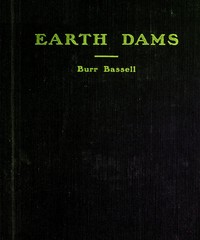
Earth dams, a study by Burr Bassell
Let's be clear from the start: Earth Dams, a Study is not a novel. You won't find any characters named John with a troubled past. What you will find is Burr Bassell, a civil engineer at the turn of the 20th century, methodically trying to stop disasters before they happen.
The Story
The 'plot' follows Bassell's investigation. He looks at dams across America that have failed—sometimes catastrophically—and ones that have stood the test of time. His job is to play forensic engineer. He examines the materials: Was it the wrong kind of clay? Was the soil too sandy? How was the dam packed down? He looks at the design: Was the slope too steep? Was there a proper way for water to seep through safely without causing a collapse? The book is his collection of evidence, photos, diagrams, and conclusions. It's the story of turning the art of building with dirt into a science.
Why You Should Read It
I loved this book for its quiet intellect. Bassell isn't a flashy writer; he's a careful observer. Reading it, you feel like you're looking over his shoulder as he kneels in the mud, examining the crack that doomed a dam. It makes you see the world differently. You start to look at every embankment, every riverbank, and wonder about the forces at work. The theme is fundamentally about listening to the land. The farmers and early builders had intuition, but Bassell wanted hard facts. His work is a humble argument for patience, study, and respect when dealing with natural forces.
Final Verdict
This book is a niche gem. It's perfect for curious minds who enjoy popular science, history buffs interested in the Industrial Age, or anyone in engineering or geology who wants a look at the foundations of their field. It's also great for readers who like primary sources—you're getting the raw thoughts of a pioneer. If you need a fast-paced plot, look elsewhere. But if you want a short, thoughtful book that changes how you see the quiet landscapes around you, Bassell's study is a rewarding, grounded read.
This title is part of the public domain archive. It serves as a testament to our shared literary heritage.

Michael Harris
1 week agoGood quality content.