
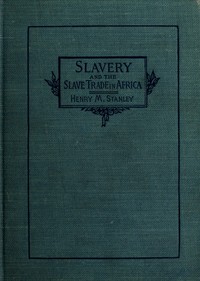
Slavery and the slave trade in Africa by Henry M. Stanley
This isn't a novel with a plot in the traditional sense. It's a primary source, a travelogue written by one of the most famous (and infamous) explorers of the 19th century. The "story" is Stanley's journey through central Africa. He describes the landscapes, the people he meets, and the complex political and economic systems he encounters. The central thread running through it all is his detailed observations of the slave trade as it was actively operating. He doesn't just condemn it from afar; he shows how it was woven into the fabric of societies, from local rulers to Arab traders, and how European goods were part of the cycle.
Why You Should Read It
You should read this because it removes the easy, distant morality we often apply to history. Stanley doesn't give you a clean hero or villain narrative. His writing forces you to sit in the discomfort of a gray area. He's clearly horrified by the violence and suffering, but he's also a product of his time, with all the biases that entails. Reading his direct descriptions—of slave caravans, markets, and the justification used by those involved—is more powerful than any modern summary. It makes the scale and the human reality of the trade sickeningly concrete. The value here is in the raw, unfiltered perspective, even when that perspective is hard to stomach or agree with.
Final Verdict
This book is for the curious reader who wants to go beyond Wikipedia summaries and engage directly with a historical witness. It's perfect for anyone interested in African history, the realities of colonialism, or the complexity of primary sources. Be warned: it's not an easy read due to both the subject matter and the older writing style. You have to be willing to read critically, to question the author's viewpoint while grappling with the facts he presents. If you're up for that challenge, it offers a perspective on the slave trade that you simply can't get from a modern history book.
Legal analysis indicates this work is in the public domain. It is now common property for all to enjoy.
Betty Brown
1 year agoEnjoyed every page.



Michael King
7 months agoVery helpful, thanks.