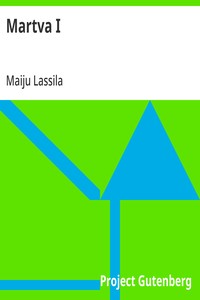
Martva I by Maiju Lassila
Maiju Lassila's Martva I is a hidden gem from early 20th-century Finland that feels surprisingly modern in its concerns. It’s a short, sharp story about the price of comfort and the weight of other people's dreams.
The Story
We meet Kalle, a man who isn't exactly a go-getter. Life is a struggle. Then, out of the blue, he learns a distant relative has died and left him a significant inheritance. This should be the answer to all his problems. But the relative, Martva, attached very specific conditions to the money. Kalle can't just take the cash and run. He has to use it to build a house exactly as described in the will, on a particular plot of land. He must plant an orchard with specific trees and live a modest, rural life there. The novel follows Kalle as he grudgingly sets about fulfilling these demands. The conflict isn't with a villain, but with his own nature. Every nail he hammers, every tree he plants, is a battle between his desire for easy money and his resentment at being told how to live.
Why You Should Read It
What makes this book stick with you is its dry, observant humor. Lassila doesn't paint Kalle as a hero or a monster, just a very relatable, flawed human. We've all felt that tug between what we should do and what we want to do. The will’s instructions are so oddly precise they become funny, highlighting how absurd it is to try and control life—and someone else's happiness—from beyond the grave. It’s a clever look at inheritance in every sense: not just money, but values, traditions, and burdens. Is Martva trying to save Kalle from a pointless life, or is he forcing Kalle to live a pointless life of *his* design?
Final Verdict
Martva I is perfect for readers who enjoy character-driven stories with a philosophical wink. If you like books that explore everyday conflicts with humor and heart, like the works of George Saunders or Kazuo Ishiguro's quieter moments, you'll appreciate Lassila's style. It’s also a fantastic, accessible entry point into classic Nordic literature—no dense prose or epic sagas here, just a timeless, human dilemma wrapped in a deceptively simple plot. A quick, thoughtful read that leaves a lasting impression.
Legal analysis indicates this work is in the public domain. Thank you for supporting open literature.