
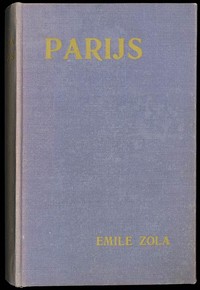
De drie steden: Parijs by Émile Zola
Émile Zola's Paris is the final, explosive chapter in his Three Cities trilogy. We follow Abbé Pierre Froment, a priest whose journey through the religious politics of Lourdes and Rome has left him spiritually shipwrecked. He returns to a Paris electrified by new ideas and old injustices.
The Story
Pierre wanders a city of stark contrasts. In elegant drawing rooms, politicians and financiers scheme. In cramped apartments, anarchists plot bombings to tear the whole system down. Pierre’s own brother, Guillaume, a scientist, is tangled in this violent world. As Pierre helps his family and tries to do good in the poor neighborhoods, his faith crumbles completely. He falls in love with Marie, Guillaume’s ward, which only deepens his inner conflict. The plot is driven by these personal dramas against the backdrop of real public terror—anarchist attacks that shook Paris in the 1890s. The story asks if the old answers of the Church can still work, or if science, social justice, or even human love must become the new foundations for hope.
Why You Should Read It
This isn't a dry historical novel. Zola makes you feel the grime and the glamour. You’re right there as a bomb explodes, and in the next chapter, you’re listening to cynical gossip in a mansion. Pierre is a fantastic guide because he’s just as confused and angry as we might be. His crisis feels real and painful. What grabbed me was how modern the problems feel: the rage against inequality, the distrust of institutions, the search for purpose in a chaotic world. Zola doesn’t give easy answers. Instead, he shows a man slowly, painfully building a new belief system from the wreckage of the old one, finding possibility in human connection and work.
Final Verdict
Perfect for readers who love big, ideas-driven novels that also have a beating heart. If you enjoyed the social scope of Victor Hugo or the moral intensity of Dostoevsky, you’ll find a friend here. It’s for anyone who’s ever looked at the problems of our time and wondered, 'How did we get here?' Zola’s Paris shows us that these struggles aren’t new, and his search for hope, against all odds, is incredibly moving. Be ready for a dense, passionate, and ultimately rewarding climb.
This work has been identified as being free of known copyright restrictions. Enjoy reading and sharing without restrictions.
William Anderson
1 year agoEnjoyed every page.