
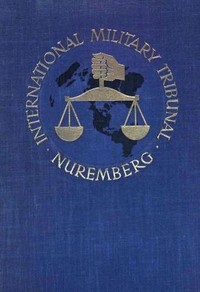
Trial of the major war criminals before the International Military Tribunal,…
Let's be clear from the start: this isn't a story with a plot in the traditional sense. It's a massive, multi-volume collection of court documents, testimony, and legal arguments. But the narrative it tells is more gripping than any thriller.
The Story
The book captures the first and most famous of the post-WWII trials, held in Nuremberg from 1945 to 1946. Twenty-one of the highest-ranking Nazis, like Hermann Göring and Rudolf Hess, sat in the dock. The charges were new and monumental: crimes against peace, war crimes, and crimes against humanity. For the first time, leaders were held personally accountable for starting a war and for the systematic murder of millions. The prosecution presented mountains of evidence—their own meticulous records, films from concentration camps, and heartbreaking survivor testimonies. The defendants argued, blamed each other, and claimed they were 'just following orders.' In the end, the judges had to decide: was this victors' justice, or was it a new standard for the world?
Why You Should Read It
Reading this feels like being in the courtroom. You get the legal back-and-forth, the shocking moments when a defendant shrugs off genocide, and the quiet dignity of the prosecutors trying to build a case for basic human decency. It's not sanitized history. The evil is bureaucratic and mundane in the documents, which somehow makes it worse. What hit me hardest wasn't the big speeches, but the small details in the evidence—the cold, itemized lists that reduced human lives to numbers. This book forces you to think. What is justice after such horror? Can a trial heal a broken world? There are no easy answers here, just the messy, difficult attempt to find them.
Final Verdict
This is not a casual read. It's dense, legalistic, and emotionally heavy. But it's perfect for anyone who wants to go beyond the textbook summary of WWII. If you're interested in law, ethics, psychology, or modern history, this is your primary source. It's also for any reader who believes that facing hard truths from the past is how we build a better future. Don't try to read it cover-to-cover like a novel. Dip in, read a day's testimony, sit with it, and then come back. It's a book that deserves—and requires—your full attention.
Legal analysis indicates this work is in the public domain. You can copy, modify, and distribute it freely.

Robert Lee
1 year agoVery helpful, thanks.