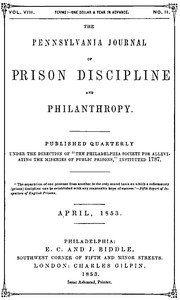
The Pennsylvania Journal of Prison Discipline and Philanthropy (Vol. VIII, No.…
Okay, let's be clear: this isn't a novel. The Pennsylvania Journal of Prison Discipline and Philanthropy is exactly what it sounds like—a collection of reports, essays, and meeting minutes from a 19th-century reform group. But that doesn't make it any less of a story. The 'plot' is the ongoing effort of the Philadelphia Society for Alleviating the Miseries of Public Prisons to change how America thinks about incarceration.
The Story
The book documents a year in the life of this society. You follow them as they inspect damp, overcrowded cells. You read their detailed arguments for separating different types of offenders, for providing basic education, and for focusing on moral instruction. The opposing 'characters' are the entrenched ideas of the time: that prisons should be places of terror and suffering to deter crime. The society's members are essentially activists, using data, moral appeals, and sheer persistence to lobby for a system that might actually reform people, not just break them.
Why You Should Read It
What grabbed me was the eerie familiarity. When a writer argues that punishing people without offering them a path to become better citizens is a failure for everyone, you could be reading an op-ed from last week. The language is formal and old-fashioned, but the human concerns shine through. They're worried about what happens to people when they get out. They're horrified by conditions that breed disease and despair. It's a powerful reminder that the fight for a more just and effective system has deep, thoughtful roots. It makes our modern debates feel part of a much longer conversation.
Final Verdict
This is a niche read, but a rewarding one. It's perfect for history buffs, true crime fans interested in the 'punishment' side of the equation, or anyone involved in social justice work today. You need some patience for the 1850s prose, but if you can push through, it offers incredible insight. You won't get thrilling narratives or character arcs, but you will get a raw, primary-source look at the beginnings of prison reform in America. It's a book that proves sometimes the most dramatic stories are found in the minutes of a committee meeting.
This is a copyright-free edition. Share knowledge freely with the world.