
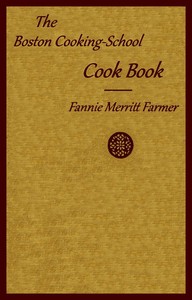
The Boston cooking-school cook book by Fannie Merritt Farmer
Let's be clear: this is not a novel. There's no villain (unless you count lumpy gravy) and no dramatic plot twist. But the story it tells is fascinating. The Boston Cooking-School Cook Book is Fannie Farmer's life's work, organized into a massive, practical guide. It starts with the absolute basics—explaining different cuts of meat, how to set a table, the science of why bread rises. Then, it marches through every category of food you can imagine, from soups and fish to cakes and preserves. The real magic is in the instructions. Fannie insisted on using level measurements (like a level cup, not a heaping one) and gave clear, step-by-step directions. She treated cooking like a science that anyone could learn.
Why You Should Read It
Reading this book is like having a direct line to the past. You see the birth of so many classic American dishes—the first printed recipe for Boston brown bread, the proper way to make chowder. But more than that, you feel Fannie Farmer's voice. She's firm, confident, and deeply practical. She believed good, nutritious food was a right, not a privilege. In an era before convenience foods, this book empowered ordinary people, especially women, to cook with confidence and skill. It’s a snapshot of a turning point, when cooking moved from instinct and tradition to a teachable, repeatable skill.
Final Verdict
This is a must-read for anyone who loves food history or has ever felt curious about the origins of their favorite recipes. It's perfect for the home cook who appreciates the 'why' behind the 'how,' and for anyone who finds beauty in a well-organized, no-nonsense guide. It's not a book you'll cook from every day (some recipes are very much of their time!), but it's a foundational text. Think of it as a historical document that also happens to teach you how to make a perfect white sauce. If you've ever enjoyed the reliability of a modern recipe, you have Fannie Farmer to thank, and this book shows you exactly why.
This text is dedicated to the public domain. You do not need permission to reproduce this work.
Donald Hernandez
1 year agoA must-have for anyone studying this subject.


Sandra King
4 months agoGreat digital experience compared to other versions.