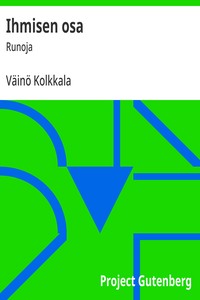
Ihmisen osa : Runoja by Väinö Kolkkala
Väinö Kolkkala's 'Ihmisen osa' is a collection of poems that feels like walking through the Finnish landscape he loved: sometimes stark and quiet, sometimes suddenly full of deep, quiet beauty. Published after the turmoil of the Second World War, these poems don't tell a single story. Instead, they offer glimpses into a life of observation and reflection.
The Story
There isn't a traditional plot. The 'story' is the arc of a human life and a nation's spirit, seen through Kolkkala's eyes. The poems move through themes of nature, war, memory, and peace. You'll read about the silent majesty of a winter forest, the ghostly echo of past battles in a now-calm field, and the fragile hope of rebuilding a life and a country. It charts an emotional journey from the shadows of conflict toward a hard-won, quiet appreciation for what remains and what can grow again.
Why You Should Read It
I picked this up not knowing what to expect from a Finnish poet of that era, and I was completely drawn in. Kolkkala's voice is clear and direct, but it carries so much weight. He doesn't use fancy words to talk about loss; he shows you the empty chair, the changed path through the woods. His love for Finland's nature isn't just pretty description—it's the bedrock of his identity and his solace. Reading this in today's busy world is like a deep breath of cold, clean air. It slows you down. It makes you look at the tree outside your own window a little differently. There's a profound resilience here that isn't loud or heroic, but steady and deeply moving.
Final Verdict
This book is perfect for anyone who loves poetry that connects deeply with place and memory. If you enjoy writers like Wendell Berry or the quieter moments in Mary Oliver's work, you'll find a kindred spirit in Kolkkala. It's also a fantastic, human-scale entry point into 20th-century Finnish history and sensibility. You don't need to be a poetry expert; you just need a quiet hour and a willingness to listen to a thoughtful, experienced voice. It’s a small book that leaves a very large, lingering impression.
This book is widely considered to be in the public domain. Preserving history for future generations.