
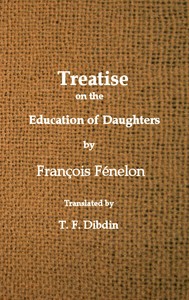
Fenelon's Treatise on the Education of Daughters by Fénelon
Let's clear something up right away: this isn't a novel. There's no protagonist named Fenelon going on adventures. Fénelon's Treatise on the Education of Daughters is exactly what the title says—an instructional manual. Written in 1687, it was aimed at governesses, mothers, and tutors of the French aristocracy and upper classes. Its 'story' is the argument it builds, step by step, for a new kind of upbringing.
The Story
Think of it as a blueprint. Fénelon starts by criticizing the harsh, neglectful, or frivolous ways girls were often raised. He then lays out his vision. He argues against physical punishment and for patience. He insists education shouldn't just be about piety and manners, but should include practical skills like household management, basic reasoning, and reading good books. He spends a lot of time on forming character—cultivating modesty, kindness, and a sense of duty—because he believed a woman's influence within the home was the bedrock of society. The 'plot' is his relentless push for a thoughtful, humane, and purposeful education, all within the unquestioned confines of a girl's ultimate destiny: marriage and motherhood.
Why You Should Read It
I picked this up out of historical curiosity and was genuinely startled. In one paragraph, Fénelon sounds shockingly modern, pleading for gentle treatment and intellectual engagement. In the next, he outlines a life of extreme subservience. This jarring contrast is the whole point. It doesn't make him a hypocrite; it makes him a man of his time trying to push the boundaries of that time. Reading him is like watching someone build a beautiful birdcage—the care he puts into the design is profound, but you're never allowed to forget it's still a cage. It gave me a much deeper, more nuanced understanding of the history of childhood and feminism than any dry textbook could.
Final Verdict
This is a niche but rewarding read. It's perfect for history lovers, educators, or anyone interested in the long story of women's rights. If you enjoy seeing how ideas evolve, or if you've ever read a modern parenting book and wondered 'but what did they used to think?', this is your answer. It's not a page-turner in the traditional sense, but as a conversation with the past, it's utterly captivating. Just be ready to read between the lines and appreciate it as the radical—and yet deeply limited—document that it is.
The copyright for this book has expired, making it public property. It is available for public use and education.
Andrew Ramirez
1 year agoThis book was worth my time since the character development leaves a lasting impact. Truly inspiring.
Oliver Gonzalez
1 month agoSimply put, the arguments are well-supported by credible references. Exceeded all my expectations.
Carol Scott
4 months agoI started reading out of curiosity and the atmosphere created is totally immersive. This story will stay with me.
Michael Martinez
1 year agoBeautifully written.




William Jones
6 months agoSolid story.